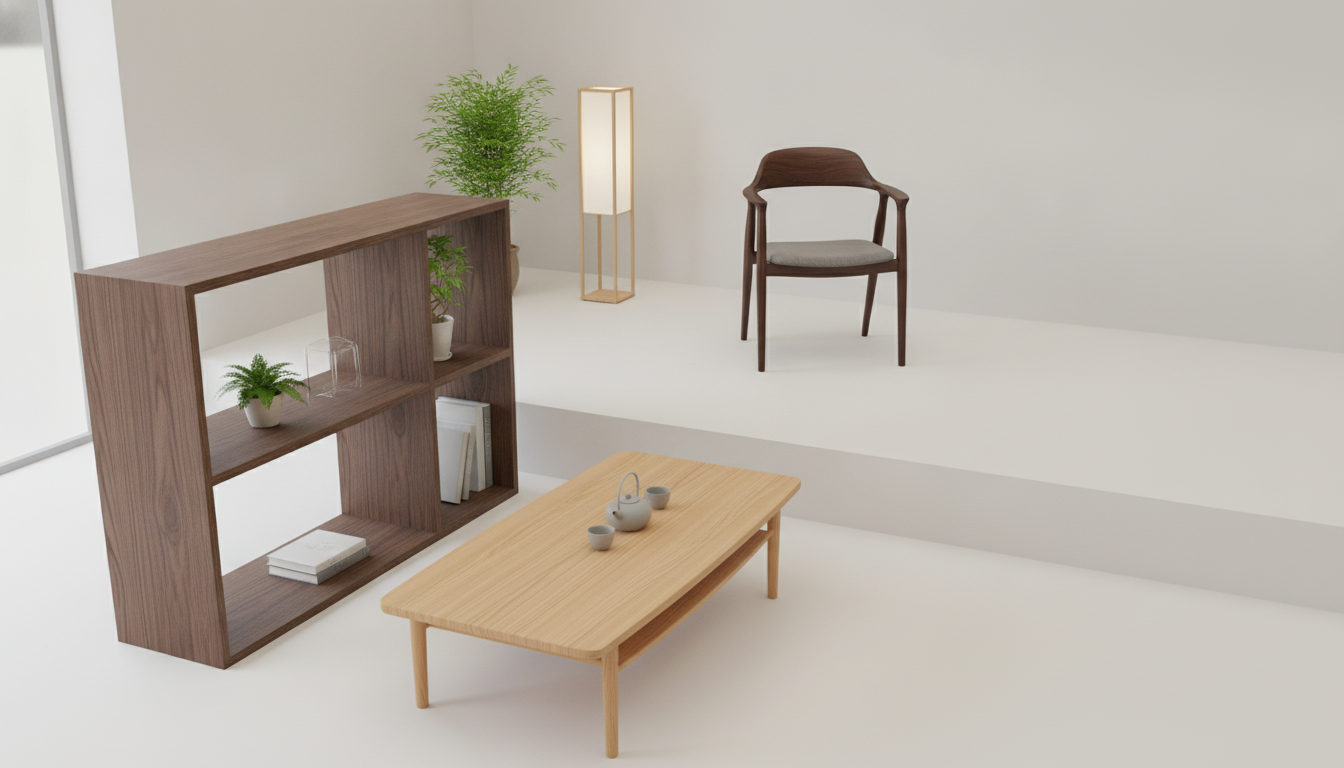
Several Japanese woods are prized for furniture, each chosen for a specific feel, look, and performance. The most common include Japanese cedar (sugi), Japanese cypress (hinoki), zelkova (keyaki), Japanese oak (kashi), paulownia (kiri), and bamboo (often used in panels or laminated builds). Makers select among them based on grain character, weight, aroma, stability, and how the wood ages with daily use.
Hinoki is one of the most celebrated Japanese woods for fine interiors and furniture. It’s light, straight-grained, and naturally aromatic, with a clean pale color that suits minimalist rooms. Hinoki is also known for good moisture resistance, which makes it popular for pieces used in humid environments, such as stools, bath accessories, and cabinetry.
Sugi is widely used in Japan thanks to its availability and easy workability. It’s lightweight with a warm, reddish tone and visible growth rings that add character. Because it’s softer than many hardwoods, sugi is often used for furniture where a relaxed, rustic texture is welcome—benches, shelving, and casework—sometimes finished to highlight its natural softness and grain.
Keyaki is a classic hardwood associated with enduring craftsmanship. It tends to be strong, tough, and visually striking, with bold grain that looks especially good on tabletops and statement cabinetry. Keyaki furniture is often made to last for generations, developing richer color as it oxidizes and is handled over time.
Kiri is exceptionally light and relatively stable, which is why it’s traditionally used for storage furniture like chests. It resists warping and is gentle on delicate items. Its pale appearance can be left natural or finished subtly, keeping the focus on simplicity and function.
Japanese oak is chosen when strength and wear resistance matter—chairs, legs, frames, and surfaces that take impact. Bamboo, while technically a grass, is common in Japanese-inspired furniture as laminated panels or accents, offering a clean look and strong performance when engineered properly.
For a deeper breakdown of popular species and how they’re used, visit https://ultimateflavor.shop/what-japanese-wood-is-used-for-furniture/.
Yes. Hinoki is valued for its straight grain, light weight, pleasant scent, and natural resistance to moisture, making it a strong choice for well-made furniture and interior pieces.










Leave a comment