What makes a vegetable ferment succeed
Successful vegetable fermentation isn’t about complicated recipes—it’s about repeating a few fundamentals that create a friendly environment for lactic acid bacteria while discouraging unwanted microbes.
- Salt + time + the right environment: Salt helps pull liquid from vegetables, slows spoilage organisms, and supports lactic acid bacteria as they acidify the brine.
- Oxygen management matters: Most vegetable ferments do best when kept anaerobic (low oxygen). That means solids stay under brine, with minimal air pockets.
- Temperature drives speed and texture: Warmer rooms ferment faster but can soften vegetables; cooler fermentation is slower and often stays crunchier.
- Consistency beats complexity: Using the same jar size, salt method, and temperature range makes it easier to dial in results and troubleshoot quickly.
For research-based safety basics, consult the National Center for Home Food Preservation (USDA-supported) and general food-safety guidance from the CDC.
The simple fermentation checklist (printable workflow)
If you want fewer surprises and more repeatable crunch, follow this workflow in order. Many batch issues trace back to one missed step: not enough salt, inconsistent temperature, or solids rising above brine.
1) Prep
- Wash hands and sanitize jars, lids, and any fermentation weights.
- Set out non-iodized salt, a scale or measuring tools, and a clean cutting surface.
2) Choose produce
- Use fresh, firm vegetables; trim bruises and soft spots.
- Avoid produce treated with preservatives when possible (fresh from the market is usually easiest to ferment).
3) Cut + pack
- Slice, shred, or spear vegetables evenly so they ferment at a similar pace.
- Pack tightly to reduce air pockets, especially for mixed-vegetable jars.
4) Salt correctly
- Use non-iodized salt (pickling, kosher, or additive-free sea salt).
- Weighing is the most consistent method—especially when repeating a favorite batch.
5) Create brine
- Brined ferments: Dissolve salt fully in water before pouring into the jar.
- Dry-salted (kraut-style): Massage salt into shredded vegetables until they release enough liquid to cover solids.
6) Submerge
- Keep all solids below the brine using a weight.
- Leave headspace for bubbling (a common cause of overflow is filling too high).
7) Cover
- Use an airlock lid, or loosely tighten a standard lid so gas can escape.
- If using a tight lid, “burp” carefully to release pressure as needed.
8) Ferment
- Store out of direct sun in a stable spot.
- Check daily early on: submersion, bubbles, and smell (pleasantly sour is the goal).
9) Taste + decide
- Start tasting after a few days (earlier for thin slices, later for chunky cuts).
- Stop when tanginess and texture match what you want.
10) Cold storage
- Move the jar to the refrigerator to slow fermentation.
- Keep vegetables submerged to maintain flavor and reduce surface growth.
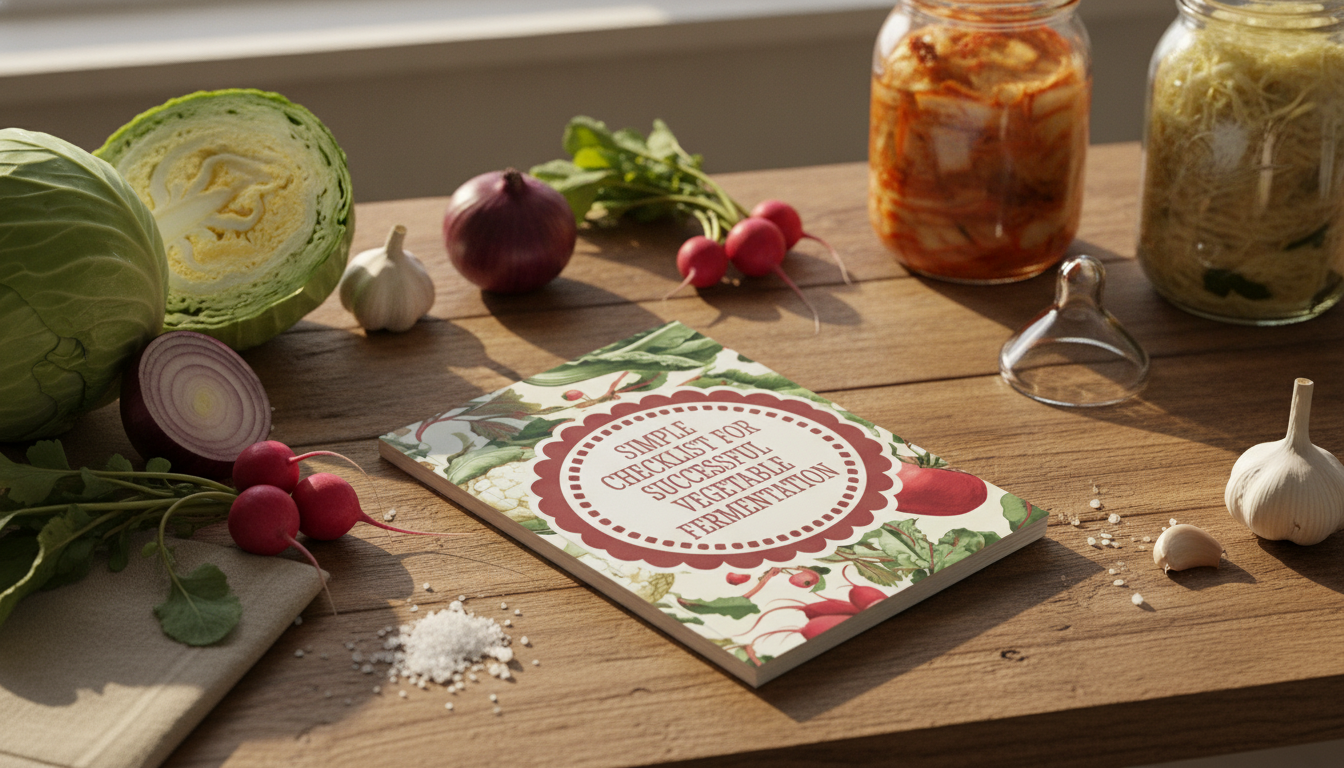
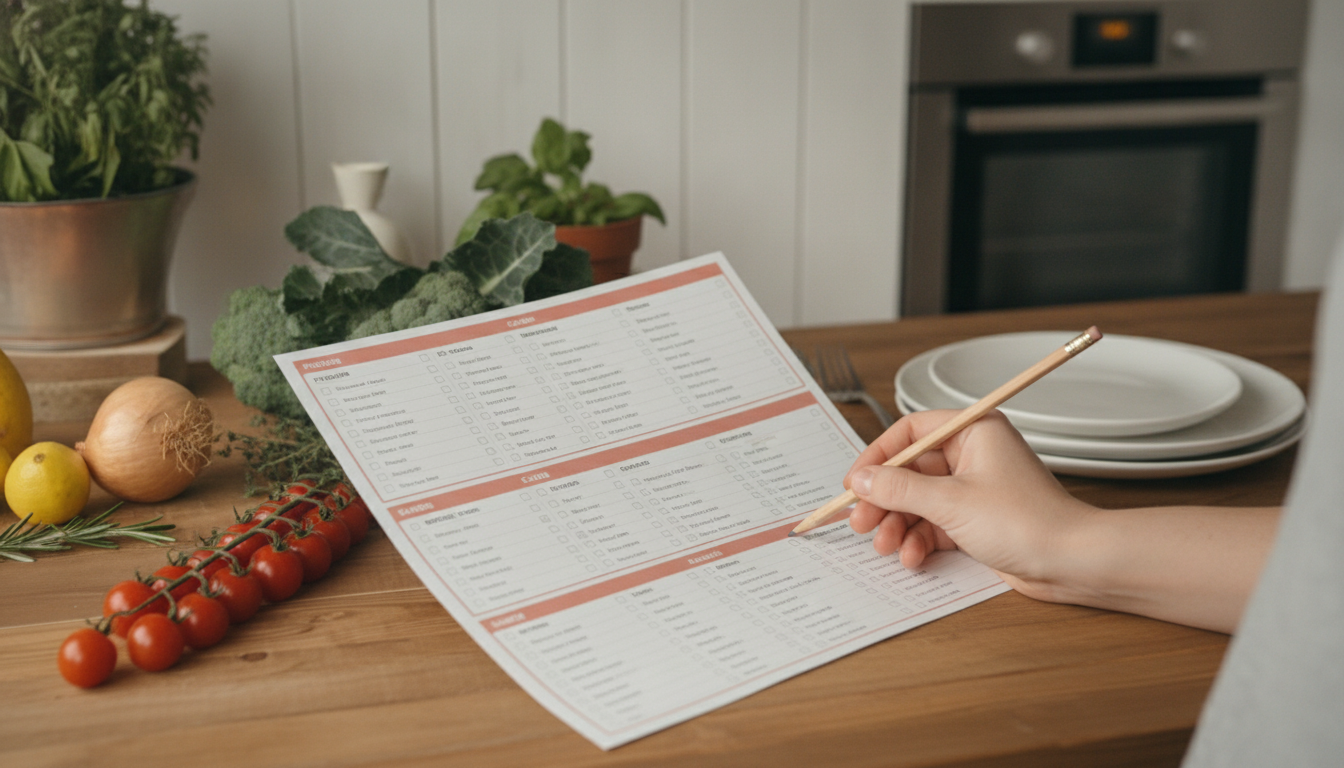
If you like having a repeatable routine you can keep on your phone or print for the kitchen, the Simple Checklist for Successful Vegetable Fermentation (digital download) is a quick grab-and-go reference for everyday batches.
Salt and timing guide (quick reference)
Use the ranges below as a starting point and adjust based on temperature, vegetable type, and how sour you like your ferments. When using a scale, brine percentage is salt weight ÷ water weight (for example, 20 g salt per 1,000 g water = 2%). Volume measures vary by salt brand and crystal size, so weighing is more reliable.
| Use case |
Brine strength |
Typical time at ~65–72°F (18–22°C) |
Notes |
| Quick pickled-style tang (cucumbers, green beans) |
2% (20 g/L) |
3–7 days |
Crisper at cooler temps; keep fully submerged. |
| All-purpose mixed vegetables |
2–2.5% (20–25 g/L) |
5–14 days |
Great baseline for most jars. |
| Harder vegetables (carrots, beets, cauliflower) |
2.5–3% (25–30 g/L) |
10–21 days |
Often benefits from a slightly higher salt range. |
| Sliced/shredded dry-salt ferments (kraut-style) |
2% by vegetable weight |
7–21 days |
Pack tightly; released juice should cover solids. |
For additional university-backed technique pointers, the University of Wisconsin-Madison Division of Extension shares practical fermentation fundamentals.
Tools that make home fermentation easier
You can ferment vegetables with simple jars and clean hands, but a few tools make the process smoother and more consistent—especially when prepping larger batches.
- A sturdy cutting surface: Stable prep makes uniform cuts easier (and safer). A larger board also helps contain mess and keep ingredients organized.
- A small pitcher or measuring cup: Helpful for dissolving brine and pouring neatly into jars without splashing salt water everywhere.
- A saved checklist: Reduces missed steps like headspace, submersion checks, and early daily monitoring.
- Optional upgrades: Glass weights, airlock lids, and a kitchen scale for reliable salt percentages.
For prep that stays steady on the counter, the Thick Bamboo Wood Cutting Board is a simple upgrade that helps keep slicing consistent. For mixing and pouring brine cleanly, the Glass Measuring Espresso & Milk Cup with Handle works well as a small brine cup for jar batches.
Troubleshooting: what’s normal vs. what to fix
Fermentation is active and a little messy by nature. The key is recognizing what’s normal activity versus a true problem.
Storing and serving fermented vegetables
FAQ
What salt should be used for fermenting vegetables?
Use non-iodized salt without anti-caking agents (pickling salt, kosher salt, or additive-free sea salt). Iodine and some additives can interfere with fermentation performance and appearance, so weighing salt for a consistent 2–3% range is a dependable starting point.
How long should vegetables ferment before refrigerating?
Refrigerate when the flavor and texture match your goal, using taste as the final guide. Many ferments land between 3–21 days depending on the vegetable, cut size, salt level, and room temperature; refrigeration slows fermentation but doesn’t completely stop it.
Is cloudy brine a problem during fermentation?
Cloudy brine and bubbles are often normal signs of active fermentation. Worry more about fuzzy colored mold, a rotten smell, or persistent sliminess—those are stronger indicators something went wrong.
Recommended for you











Leave a comment