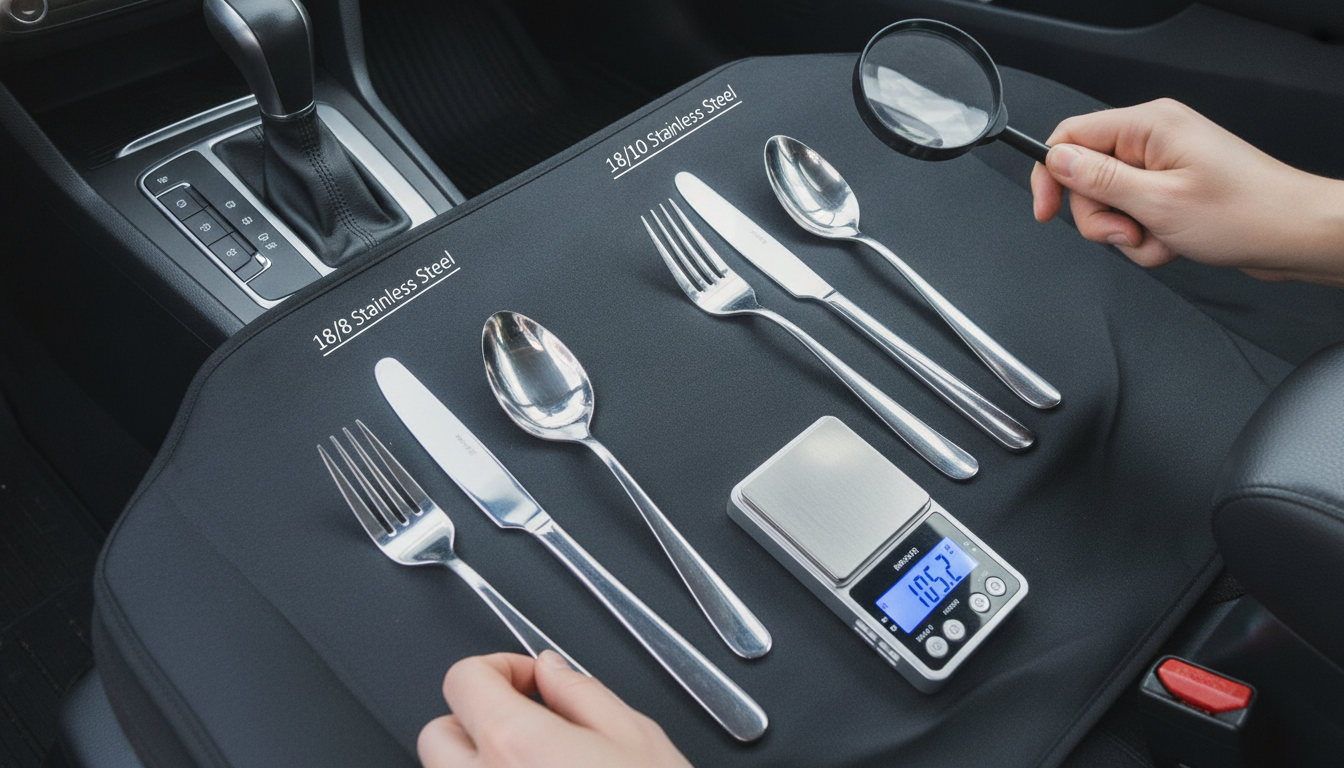
All else being equal, 18/10 stainless steel is typically a touch heavier than 18/8. The difference comes from chemistry: both alloys contain about 18% chromium, but 18/10 has roughly 10% nickel versus about 8% nickel in 18/8. Nickel is slightly denser than iron, so adding a bit more can nudge the weight upward.
That said, the real-world weight difference between 18/8 and 18/10 in flatware is usually small—often hard to notice in your hand. In a cutlery set, “heavier” is more strongly influenced by the thickness of the utensil, the shape and size of the handle, and whether the pieces are hollow- or solid-handled than by the extra 2% nickel.
If two forks are the same pattern and dimensions, 18/10 may come out marginally heavier. But when comparing different brands or designs, construction choices outweigh alloy differences. A more substantial handle, a thicker neck, or a broader spoon bowl can add grams faster than a small change in nickel content.
For shoppers who prefer a satisfyingly “luxury” feel, look for details like a balanced handle-to-head ratio, thicker gauge, and a polished finish that doesn’t feel flimsy at the edges. For a practical reference point on what to look for in a premium set, see the complete guide here: Luxury 24-Piece Stainless Steel Cutlery Set for 6 Guide.
Yes. The extra nickel in 18/10 is often associated with improved corrosion resistance and a brighter, more mirror-like polish over time. Both 18/8 and 18/10 are considered high-quality stainless steels for flatware, but 18/10 is commonly positioned as the more premium option because it can better maintain its shine and resist certain types of staining in everyday use.
It can be fine for everyday use, but it usually has less corrosion resistance and may be more prone to staining than 18/8 or 18/10. It’s also often less lustrous because it contains little to no nickel.









Leave a comment