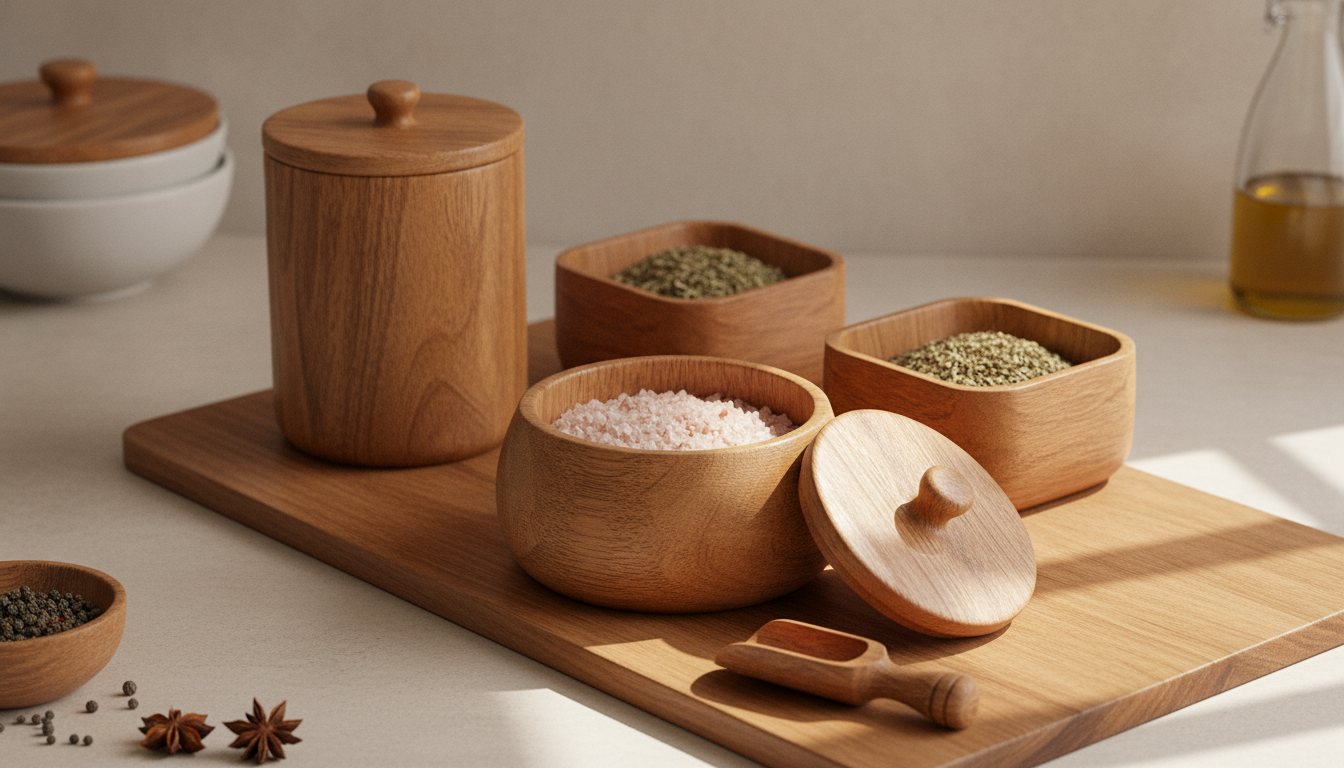
Yes—acacia wood is generally considered safe for food storage when it’s unfinished or sealed with a food-safe finish. Acacia is a dense hardwood, which helps it resist denting and can make it less prone to absorbing odors compared to softer woods. That said, safety comes down to how the wood is made and maintained: avoid unknown coatings, keep it clean and dry, and refresh protective oil/wax as needed.
Acacia’s tight grain and natural hardness make it a popular material for kitchen tools and storage pieces like bowls, boxes, and salt cellars. For dry goods (salt, spices, tea, coffee), it performs especially well because it doesn’t require an airtight seal to stay functional. Its durability also helps the container keep its shape and lid fit over time, which matters for everyday “grab-and-go” seasoning setups.
If you’re using an acacia pinch box for salt or pepper, it’s smart to choose one designed for frequent opening and closing, with a smooth interior that’s easy to wipe. For a deeper look at how acacia works for seasoning storage and quick pinches, see this acacia wood salt & pepper box guide.
Wood containers—including acacia—aren’t ideal for very wet, oily, or highly acidic foods over long periods. Prolonged moisture can cause swelling, warping, or cracking, and strong acids may dull or damage certain finishes. For leftovers, soups, or anything that must be fully airtight and leakproof, glass or stainless steel is usually the better pick.
Wipe it with a slightly damp cloth and mild soap if needed, then dry right away. Reapply food-safe mineral oil (or a beeswax/mineral oil blend) when the wood starts to look dry to help protect it from moisture and stains.









Leave a comment