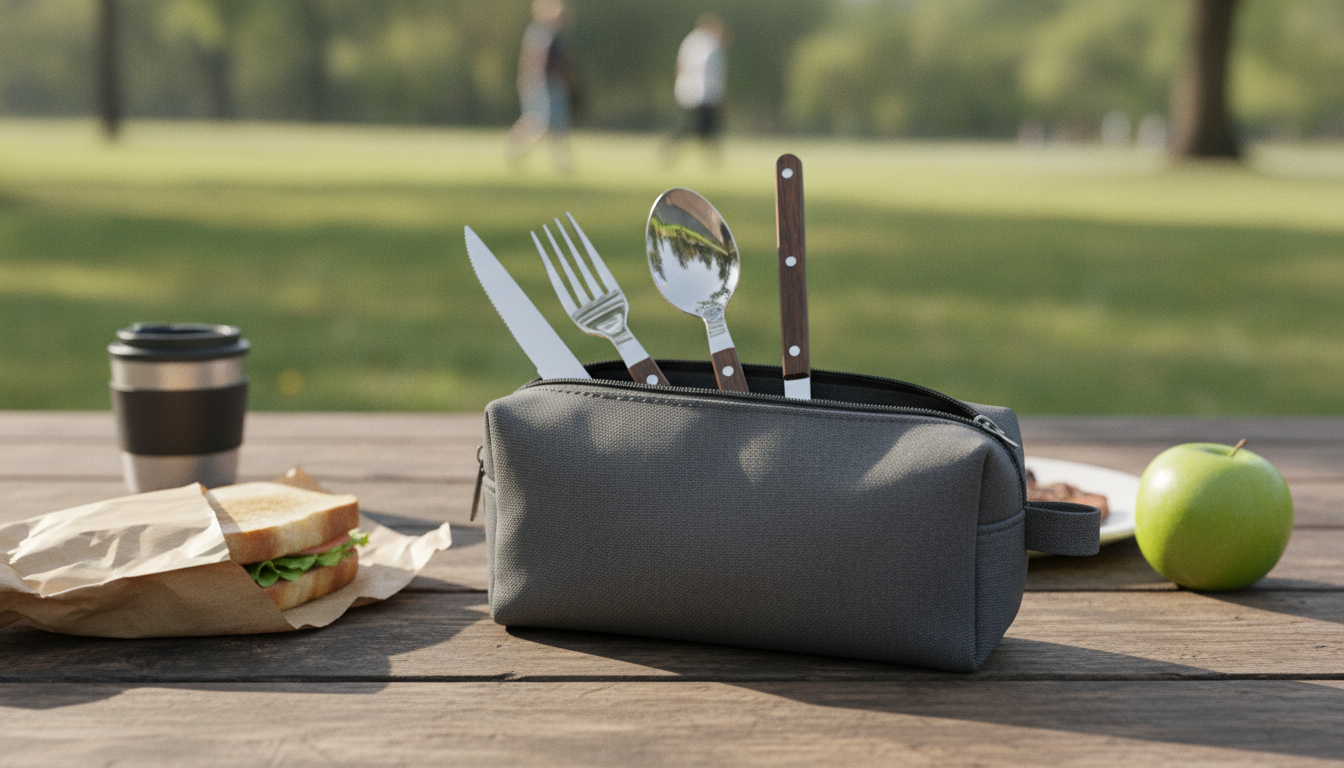
A portable tableware set makes it easy to eat comfortably away from home while cutting down on disposable utensils. Stainless steel options are valued for their durability, easy cleaning, and neutral taste, making them a practical choice for commutes, picnics, camping, and keeping a spare set in a bag or car.
A portable stainless steel tableware set is a compact bundle of reusable utensils designed to travel in a pouch or case—ready whenever lunch plans change or takeout arrives without decent cutlery. Most sets cover the basics (spoon, fork, and knife), while some add chopsticks or a straw for noodle bowls, salads, smoothies, and more.
If you want a simple everyday carry option, the Stainless Steel Portable Tableware Set is an easy add to a lunch bag, backpack, or desk drawer—especially when you’d rather skip flimsy plastic forks.
Portable utensils look similar at a glance, but small design details matter when you’re using the set week after week. Comfort, cleanability, and storage are usually what separate a “backup-only” kit from one that becomes part of your routine.
For extra confidence when shopping for food-contact items, it can help to understand how food-contact materials are regulated and tested. The U.S. Food & Drug Administration’s overview of Food Contact Substances is a useful reference point, and NSF’s food equipment standards overview explains why material quality and cleanability matter in everyday use.
The best part of a portable set is how often it quietly “saves the meal.” Instead of hoping a café has sturdy cutlery—or accepting whatever arrives in the bag—you always have something reliable and familiar.
Stainless steel is low-maintenance, but a few habits keep a travel set fresher and nicer-looking—especially when it lives inside a closed pouch for hours.
| Material | Durability | Cleaning ease | Taste/odor retention | Typical best use |
|---|---|---|---|---|
| Stainless steel | High | High | Low | Everyday carry, travel, work lunches |
| Plastic | Low–Medium | Medium | Medium–High | Short-term use, emergency backup |
| Bamboo/Wood | Medium | Medium | Medium | Lightweight kits, gentle utensils for certain cookware |
| Titanium | High | High | Low | Ultralight travel and backpacking |
For a broader view of practical reuse, the U.S. Environmental Protection Agency’s reducing and reusing basics highlights simple ways to cut down on single-use items without overcomplicating daily life.
Generally yes for many stainless steel utensils, but it’s best to follow the set’s care guidance. Using non-abrasive detergent and drying well after the cycle helps reduce spotting and water marks.
Quality stainless steel is designed to be neutral with food. If any off taste shows up, it’s often from residue or harsh cleaners, so a thorough wash and rinse usually solves it.
Keep used utensils separated in a small bag or a case with a “used” compartment until you can wash them. If possible, rinse and dry them before long-term storage to prevent moisture buildup and odors.










Leave a comment