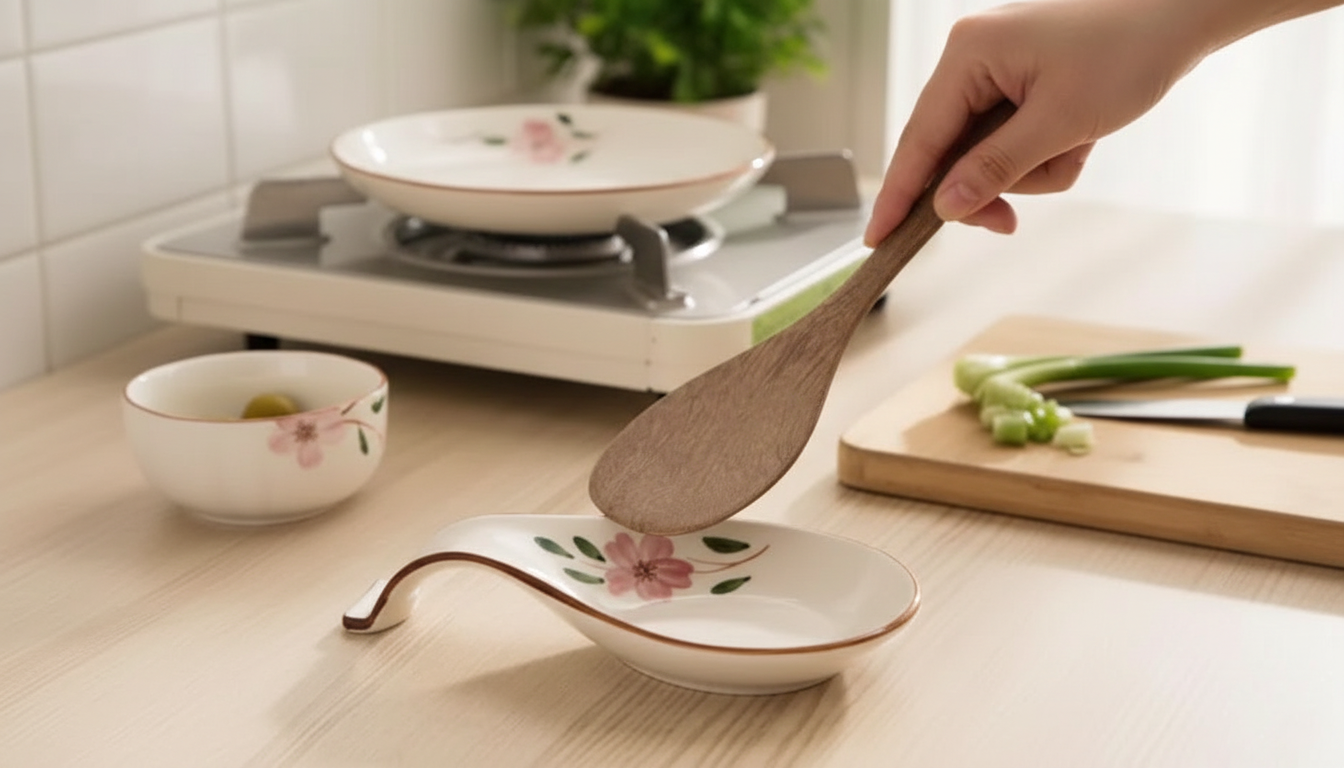
Cooking gets messy fast—especially when a sauce is bubbling, rice is steaming, and you’re switching between a spoon, spatula, and ladle every few minutes. A Japanese-style ceramic spoon-and-spatula rest with a built-in countertop shelf gives utensils a dedicated “pause point” so drips stay contained and your prep area looks calmer. The minimalist, sculpted shape fits neatly beside a stove or cutting board while helping keep tool heads elevated and handles easy to grab.
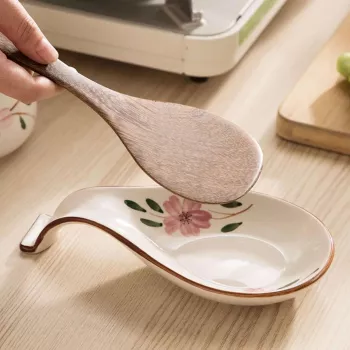
This ceramic utensil rest is designed to hold everyday cooking tools—spoons, spatulas, ladles, and turners—between stirring steps. Unlike a flat rest that simply catches drips, the integrated countertop shelf adds a slightly raised landing area that helps separate utensil heads from the counter surface.
That “shelf” detail also helps keep handles angled in a way that’s quick to re-grab, which matters when timing is tight and you’re moving from pan to plate.
Ceramic has a naturally smooth feel, and that matters for cleanup. When you’re dealing with oily marinades, sugary glazes, or starchy rice water, a non-porous-looking surface tends to wipe down more easily than rougher materials.
| Utensil type | How it sits | Why it’s helpful |
|---|---|---|
| Cooking spoon | Bowl end rests on the ceramic surface | Catches drips between stirs |
| Silicone spatula | Flat head supported while handle stays accessible | Keeps sauces and batters off the counter |
| Ladle | Deep bowl rests securely when paused | Reduces puddles near the stove |
| Tongs or turner | Ends can rest on the shelf while handles angle outward | Helps keep tools within reach during flipping and plating |
A utensil rest earns its spot when it matches how you actually cook. This style works especially well in zones where drips tend to collect and you’re trying to keep your workflow clean.
For extra protection in high-traffic cooking zones, pairing a utensil rest with good cleaning habits helps reduce the chance of spreading raw-food residue around the kitchen. The USDA and FDA both emphasize cleanliness and proper sanitizing as part of safer food handling at home (USDA FSIS cleaning and sanitizing guidance, FDA home food safety basics).
Ceramic is straightforward to care for, but a few small habits keep it looking crisp—especially if it sits near heat and splatter.
Beyond function, this kind of utensil rest adds a purposeful accent—one that looks intentional instead of “another thing on the counter.” The Japanese-inspired silhouette blends easily with modern and minimalist kitchens, and it fits naturally beside wood tools, bamboo boards, and stainless cookware.
It’s designed to work with common cooking tools, and many setups can accommodate more than one utensil depending on handle size and shape. The built-in shelf helps keep tool heads separated and elevated, which makes sharing the space easier.
Yes—ceramic’s smooth surface typically wipes clean without much effort. For best results, rinse soon after use and wash with mild dish soap and a non-scratch sponge, avoiding abrasive pads that can dull the finish.
It helps contain drips under utensil heads and keeps tools slightly elevated, which can reduce mess in the immediate cooking area. A quick wipe-down around the stove is still normal during active cooking, but cleanup is usually faster.










Leave a comment