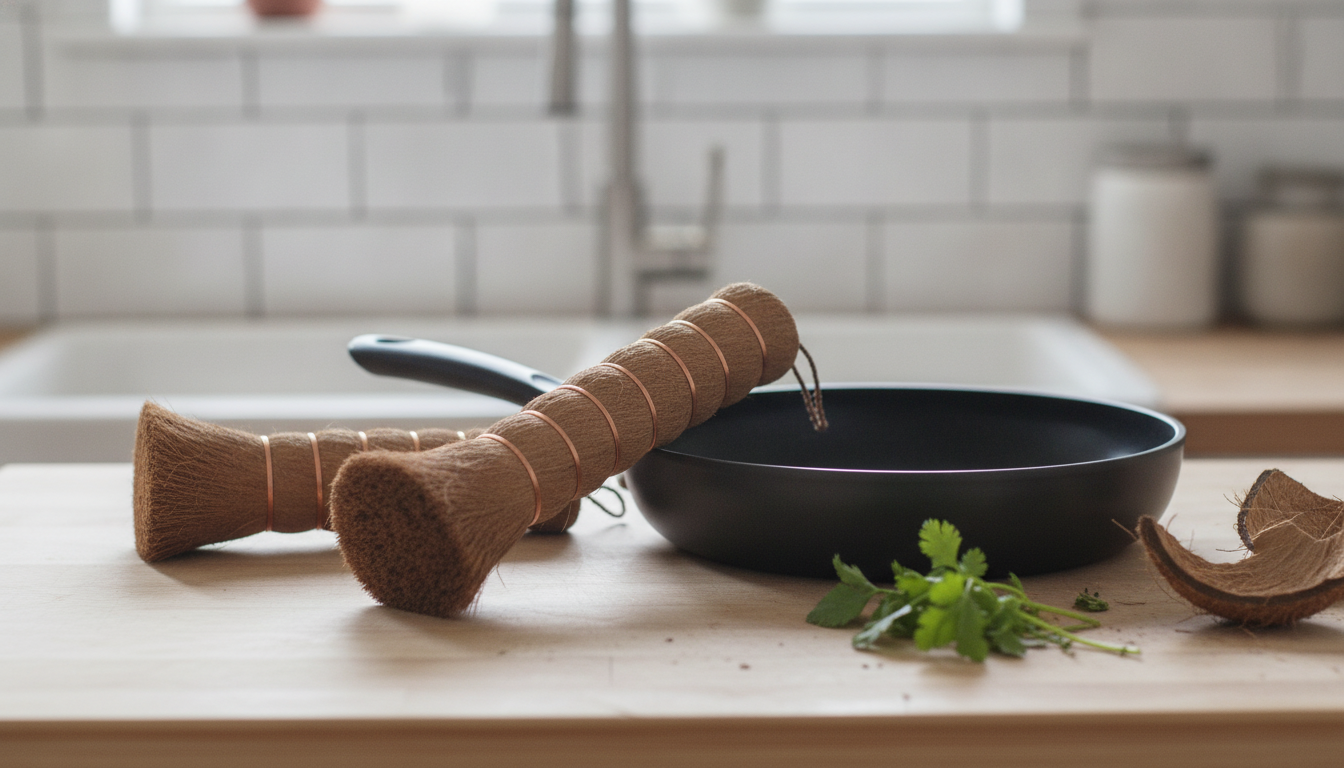
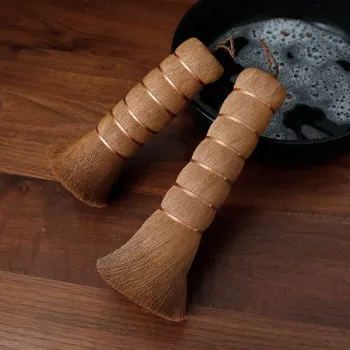
A pot brush for non-stick cookware should clean stuck-on residue without scratching the coating, while still reaching deep pots and hot surfaces safely. This natural coconut palm brush pairs plant-based bristles with a long handle to help scrub efficiently, keep hands away from heat, and reduce reliance on plastic-heavy tools. For everyday cleanup—eggs, oatmeal, pan sauces, or a sheet pan that needs a quick refresh—this style of brush aims for that sweet spot: effective scrubbing without turning dishwashing into a battle.
Coconut palm fibers are known for a firm, springy feel. In practical terms, that means the bristles can lift film and food bits that cling to cookware, but they’re typically gentler than metal scrubbers or ultra-stiff synthetic options that can be too aggressive for coated surfaces.
Another benefit is how the bristles “release” debris. Compared with a thick sponge, a brush head is often easier to rinse clean, which can be a big deal when you’re dealing with oils, creamy sauces, or seasoning residue that likes to linger.
Handle length can feel like a small detail—until you’re washing a tall stockpot or trying to scrub a casserole dish while it’s still warm. A longer handle gives you reach, comfort, and control.
Less pressure matters more than most people think with non-stick. Pressing down hard with any tool increases friction and wear; a long handle helps you use steadier, lighter strokes that rely on bristle action rather than force.
Non-stick coatings last longer when they’re treated gently—especially during cleaning. Even a “safe” brush can cause unnecessary wear if the pan is overheated, the pressure is heavy, or the cleaning product is too abrasive.
If you routinely cook on non-stick, it also helps to keep heat in check. For background on nonstick cookware safety and general best practices, the American Cancer Society’s overview of nonstick cookware is a solid reference. For step-by-step cleaning routines (including soaking methods that avoid scraping), see Good Housekeeping’s guide to cleaning nonstick pans.
A coconut palm pot brush with a long handle is an everyday tool, but it shines in a few specific cleanup scenarios—especially where you want to protect a coating while still removing clingy residue.
| Tool | Gentle on non-stick | Scrubbing strength | Odor resistance | Notes |
|---|---|---|---|---|
| Coconut palm pot brush (long handle) | Usually yes (use light pressure) | Medium | Medium-High | Good reach; dry well between uses |
| Soft sponge | Yes | Low-Medium | Low | Replace frequently to avoid odors |
| Nylon dish brush | Yes | Medium | Medium | Plastic-based; keep away from high heat |
| Abrasive scrub pad / steel wool | No | High | Medium | Can scratch coatings; best reserved for uncoated cookware |
Coconut palm bristles are typically gentler than metal scrubbers, but results depend on the pan’s coating condition and how much pressure you use. Use light pressure, soak stuck-on food instead of scraping, and test on a small area if the coating is delicate or already worn.
Rinse it thoroughly, shake out excess water, and let it air-dry bristles-down or hang it so moisture can drain away. Avoid leaving the brush soaking in water, which can shorten the life of natural fibers.
Yes—it’s suitable for general cleaning on both. For cast iron, avoid long soaks, dry promptly, and apply a light coat of oil; for stainless steel with stubborn residue, a brief soak (or a non-scratch cleaner) may still be needed.











Leave a comment