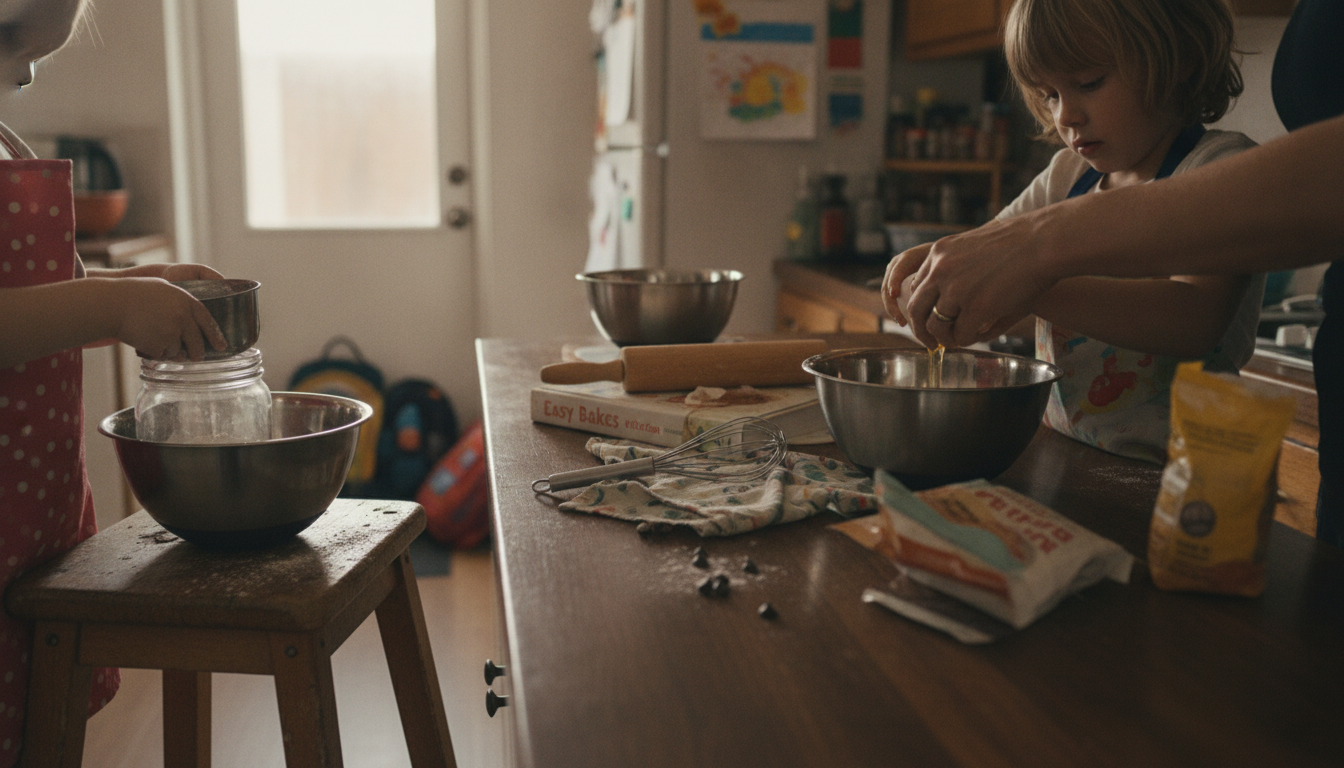
Starting to bake is easiest when you keep the first few projects simple and focus on repeatable basics. Pick one beginner-friendly recipe (like muffins, banana bread, drop cookies, or a simple sheet cake), read it all the way through, and set up your workspace before you turn on the oven. Baking rewards small, careful steps more than improvising.
You don’t need a packed kitchen. A few reliable tools will cover most beginner bakes: measuring cups and spoons, a kitchen scale (optional but helpful), mixing bowls, a whisk, a rubber spatula, a baking sheet, and one or two pans (like an 8×8 or 9×13). A basic instant-read thermometer can prevent underbaked centers and overbaked edges.
Keep all-purpose flour, granulated sugar, brown sugar, baking powder, baking soda, salt, vanilla extract, and cocoa powder (if you like chocolate). In the fridge, have eggs, butter, and milk or buttermilk. These ingredients combine into dozens of beginner recipes without extra shopping trips.
Use the method the recipe expects. If measuring flour by cups, spoon flour into the cup and level it off—don’t pack it down. When possible, weigh ingredients for consistency, especially flour and sugar. Accurate measuring is the fastest way to get repeat results.
Choose recipes that don’t require complicated techniques (like laminating dough or tempering chocolate). Practice basics like creaming butter and sugar, gently folding in flour, and checking doneness with a toothpick or thermometer. Once you nail one recipe, change only one variable next time (a different mix-in, a new pan size, or a flavor swap).
Preheat the oven fully, line pans, and measure ingredients before mixing. This keeps batters from sitting too long (which can affect rise) and prevents last-minute scrambling.
For a practical checklist of tools, staples, and easy tips, visit this baking basics guide.
Drop cookies, muffins, quick breads, and simple sheet cakes are great starters because the mixing steps are straightforward and the timing is forgiving.








Leave a comment