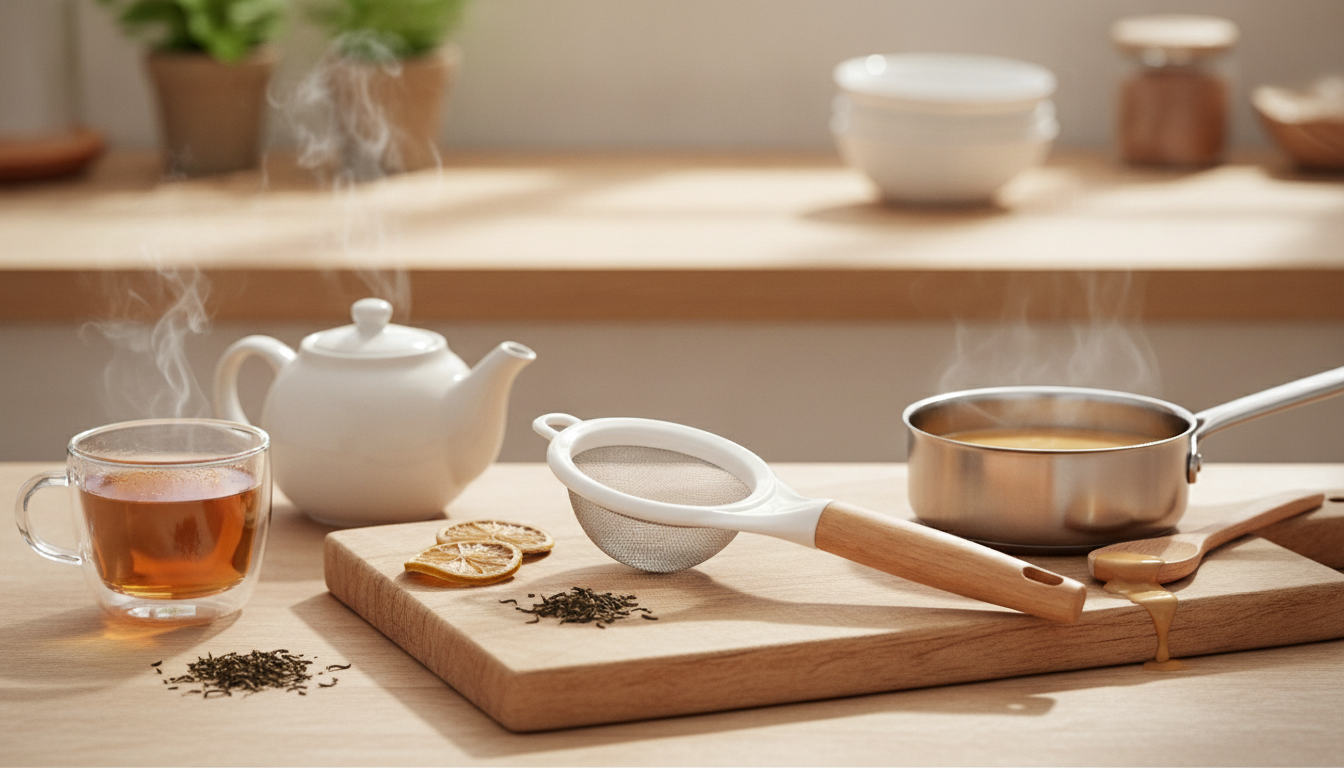
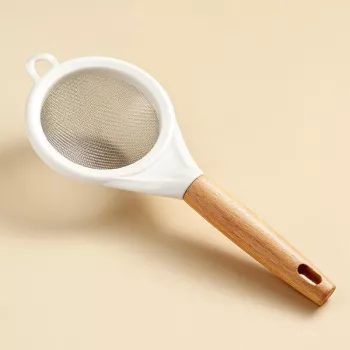
A fine mesh strainer is one of the fastest ways to improve everyday cooking and drink prep—catching tiny bits, smoothing sauces, and keeping broths clear. This stainless steel fine mesh kitchen strainer with a wooden handle is built for quick, controlled straining while staying comfortable to hold over hot pots and mugs.
When a standard colander is too wide and a paper filter feels wasteful, a fine mesh strainer becomes the practical middle ground. It’s the kind of tool that earns a permanent spot next to the stove because it handles quick tasks without setup or cleanup drama.
Not all strainers are designed for the same job. A coarse strainer is great for speed and volume, while fine mesh is about clarity and precision—especially when the “stuff you don’t want” is smaller than a grain of rice.
| Task | Fine Mesh | Coarse Strainer |
|---|---|---|
| Dusting powdered sugar or cocoa | Best choice | Not ideal |
| Straining tea leaves or coffee grounds | Best choice | Often lets sediment through |
| Rinsing quinoa or small grains | Best choice | Risk of losing grains |
| Draining pasta | Works, but slower | Best choice |
| Clarifying broth or sauce | Best choice | Leaves fine particles behind |
Material choices affect more than looks. Stainless steel and wood work together here for durability, comfort, and better control—especially when you’re working with heat, steam, and slippery hands.
For day-to-day kitchen hygiene, it also helps to follow clean-as-you-go habits—especially after handling raw ingredients or when tools touch ready-to-eat foods. The USDA’s guidance on keeping kitchen tools clean is a helpful reference for building those routines: USDA Food Safety and Inspection Service: Kitchen Companion—Clean.
Fine mesh works best when it’s allowed to filter naturally. The goal isn’t to force everything through—it’s to let gravity separate the smooth from the gritty.
If you make espresso drinks or flavored iced coffees, pair the strainer with a small pouring vessel for accuracy. The Glass Measuring Espresso & Milk Cup with Handle makes it easy to strain directly into a mug while controlling the flow—especially useful for catching tea leaves or spice specks from infused syrups.
Fine mesh performs best when the openings stay clear. The main trick is timing: a quick rinse immediately after use prevents most buildup and makes deep scrubbing rare.
For kitchens that follow food-service-style standards at home, the FDA Food Code is a solid reference point for sanitation concepts and tool care practices: FDA: Food Code (Retail Food Protection).
For everyday cooking structure, the digital guide Fresh Flavors Made Simple with Low Carb Recipes pairs well with tools like a fine mesh strainer—helping streamline prep steps like rinsing grains/beans and finishing quick pan sauces.
And if grilling is a regular thing, The Backyard Grilling Master Checklist is a smart companion for outdoor prep—where a quick strain can rescue a basting sauce from char flakes or herb sediment.
Often yes for everyday broths, sauces, and infused liquids. For ultra-fine clarification or thicker purées, cheesecloth can still filter more finely than mesh.
Hand-wash, rinse promptly, and dry thoroughly. Avoid long soaks, and store it in a dry spot so the wood stays in good condition.
Starchy mixtures, thick sauces, and very fine powders are the most common culprits. Rinsing right away and using a soft brush usually clears the mesh quickly.









Leave a comment