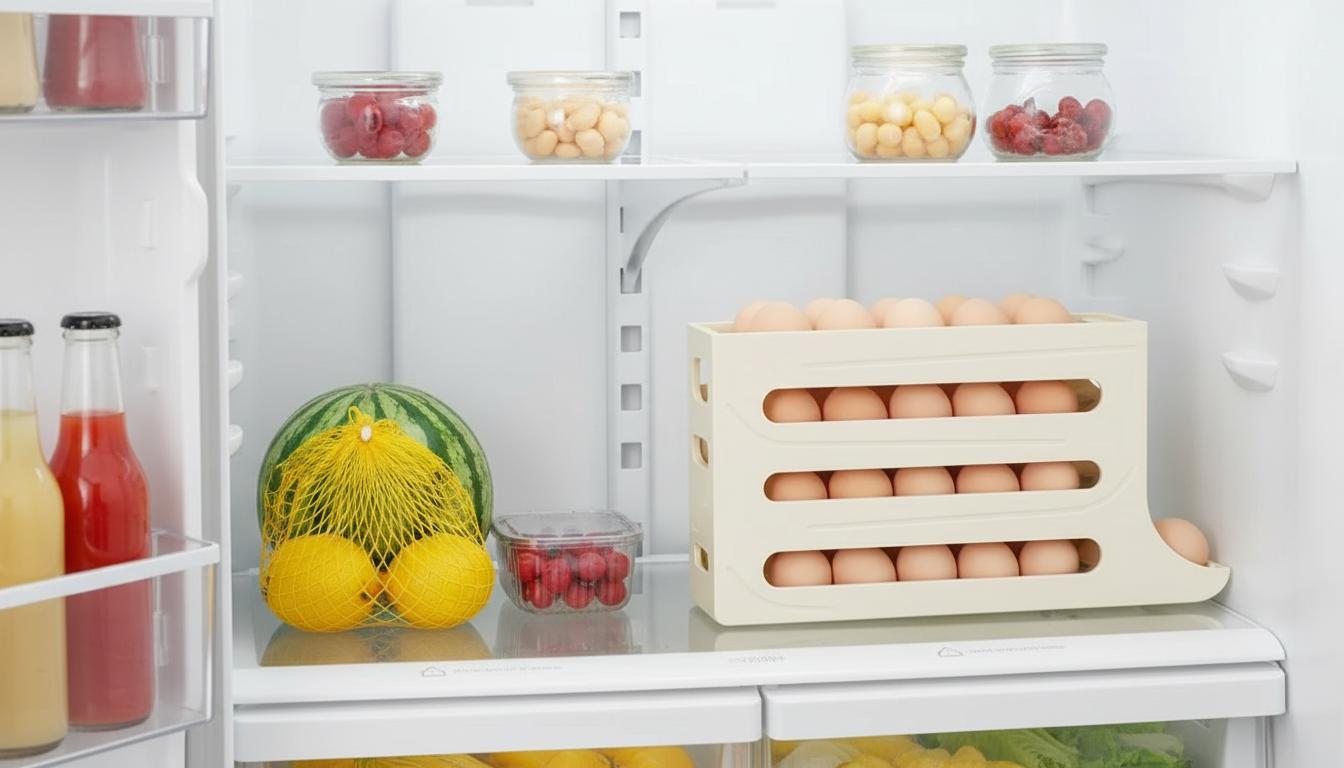
A tidy fridge or countertop starts with storage that makes daily cooking easier. A 4-tier auto-rolling egg rack stores more eggs in less space while keeping the oldest eggs at the front, reducing breakage from shifting cartons and helping keep inventory visible at a glance. The result is a calmer morning routine: fewer cartons to shuffle, fewer “mystery eggs” hiding in the back, and a cleaner, more intentional setup for everyday meals.
An auto-rolling egg rack uses a simple gravity-fed track. When you remove one egg from the front, the next egg gently rolls into place—so there’s always an egg ready to grab without digging through a carton.
That “effortless” feeling comes from removing friction in the smallest steps—no lids, no stacking, no shifting boxes. Just reach, lift, and go.
A multi-level rack is designed for kitchens where shelf space is precious but eggs are a constant. With four tiers, you get more capacity per square inch compared with storing multiple cartons side-by-side.
| Storage method | Best for | Trade-offs |
|---|---|---|
| 4-tier rolling rack | Maximum visibility and quick access; space savings on shelves | Needs a stable, level surface so the roll-forward action stays smooth |
| Standard carton | Short-term storage; easy stacking for a few cartons | Takes more flat shelf space; eggs are less visible |
| Egg tray (flat) | Single-layer organization; quick wipe-down | Lower capacity; still uses more horizontal space |
Placement matters because smooth rolling depends on a steady, predictable surface. The good news: a 4-tier dispenser adapts well to several kitchen zones.
For food-safety best practices, consult authoritative guidance such as the USDA Food Safety and Inspection Service and the FDA egg safety resource.
Most cracking issues come from uneven surfaces or overcrowding. A few small habits keep the roll-forward action controlled and gentle.
Designed for tidy, space-conscious storage, the 4-Tier Auto Rolling Egg Dispenser Rack keeps eggs neatly contained while feeding the next egg forward automatically. It’s a smart fit for refrigerators, countertops, or pantry shelves where a slim vertical footprint matters—and where quick counting and quick grabbing make everyday cooking smoother.
| Item | Details |
|---|---|
| Name | 4-Tier Auto Rolling Egg Dispenser Rack – Space-Saving Kitchen Organizer |
| Price | $16.51 |
| Availability | In stock |
They typically won’t if the rack sits on a stable, level surface and the lanes aren’t overcrowded. Gentle loading, avoiding overfilling, and keeping similar egg sizes together helps prevent sudden movement and shell-to-shell impact.
Many food-safety guidelines recommend storing eggs on an interior shelf where temperatures are steadier than the door. If using a rack, placing it on a flat interior shelf can also help reduce jostling and keep rolling smooth.
Wipe it about once a week and any time there’s a spill or residue. Remove eggs first, wash with mild soap and warm water, and dry fully before reloading.










Leave a comment